Cardavela

Most people who give up on vocabulary do not lack ability. They lack a routine. It starts with enthusiasm, then a couple of missed days, then a feeling that you need to "start over properly," and it slides. The fix is to make the daily step so small it is hard to skip. Five minutes a day is a realistic target. Here is how to build that habit and which parts of Cardavela are designed to help.
Why small steps hold up
"An hour of language study every day" sounds great and needs a free hour, which most days do not have. A small goal removes that obstacle. Five minutes turns up almost anywhere: in a queue, on a bus, while the kettle boils.
Short, regular sessions also suit how vocabulary is learned. Spaced repetition depends on words returning to you with gaps in between. If you check in daily, the FSRS scheduler can bring each word back right around when it starts to slip. One long session a week breaks that rhythm.
Sessions of up to 8 cards
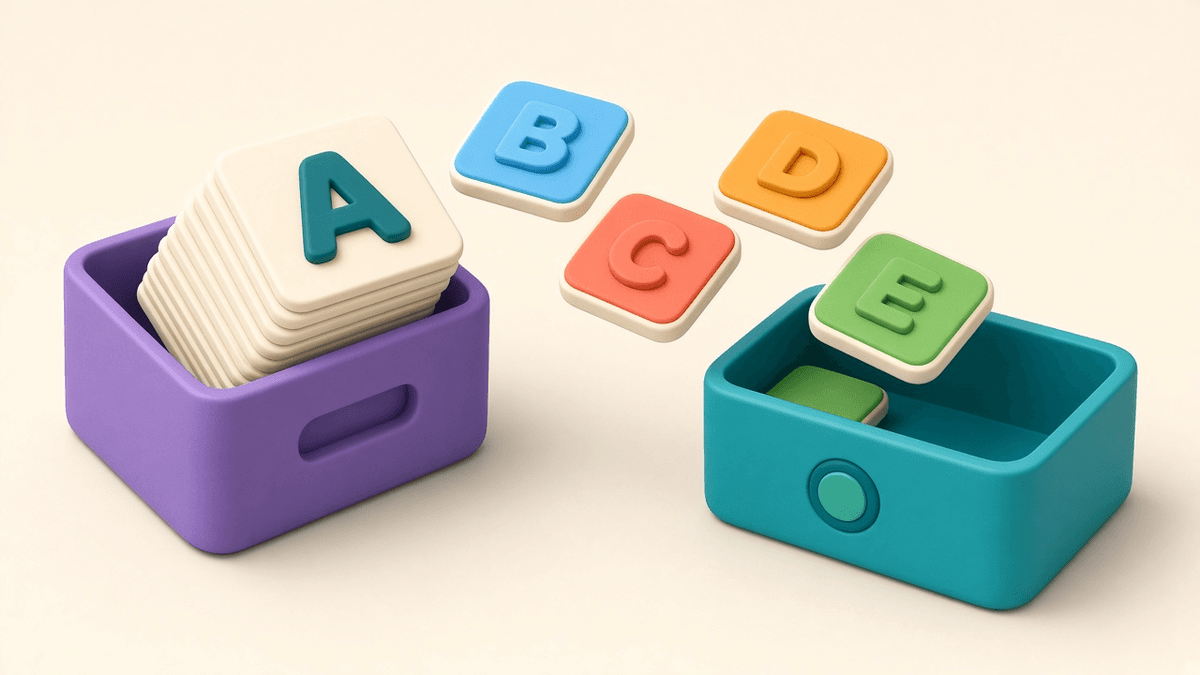
A Cardavela session is up to 8 cards, on purpose. It is easy to start and easy to finish. You are not sitting down to "study a language," you are just clearing a few cards.
It goes like this: one card fills the screen, a tap flips it to show the answer, an example and spoken audio, then you swipe right for Know, left for Don't know, or up for Easy. The Don't know, Hard and Know buttons work too. A couple of minutes and you are done.
Feel like more? Do another. If not, the day still counts. That low bar is exactly what makes the habit durable.
Streaks and statistics
Motivation lasts longer when you can see progress. Cardavela's statistics include:
- Streak: how many days in a row you have studied.
- Marks per day: how many cards you rated each day.
- Words by list: how many words sit in Don't know, Hard and Know.
- Returns for the week ahead: how many words are due over the next days.
- A 12-week calendar: a quick picture of how consistent you have been.
A streak is a simple nudge, but an effective one. Few people want to break a run of several weeks over one lazy evening. And the 12-week calendar often shows you have been more consistent than it felt.
Study anywhere, on Apple Watch or in a browser
Reviews on Apple Watch. Sometimes pulling out your phone is awkward, or you know it will turn into scrolling. For those moments there is the Cardavela app for Apple Watch, so you can study cards on your wrist. Answers sync to your iPhone automatically, so your statistics and review schedule stay in one place. The watch is ideal for the smallest gaps in the day: waiting for an elevator, standing at a crosswalk, walking to the station. A few cards on your wrist and the day's minimum is covered.
Studying online at cardavela.dev. At a computer, you do not need your phone at all. On cardavela.dev you can study the free decks online in your browser. Progress is kept in your browser's local storage, with no sign-up. You can also download the decks as CSV or TXT there.
It works well as a short break from work: open a tab, clear a few cards, get back to what you were doing.
Making the habit stick
A few practical suggestions:
- Attach it to something you already do. One session with your morning coffee, or on your commute.
- Set a minimum. One session of up to 8 cards counts as a full day.
- Do not try to catch up. Missed a day? Just carry on. The scheduler will sort out the reviews.
- Rate honestly. A habit only helps if the reviews work, and they work on honest answers.
- Mix it up now and then. Train only your Don't know list, or play Pairs or Ring with it.
The same routine works whether you are a Russian speaker building English vocabulary or an English speaker learning Russian with a deck of your own. The habit is the hard part; the app just keeps the sessions small.
Start today
Five minutes is one or two sessions. Download Cardavela from the App Store: no account, no ads, works offline, with an Apple Watch app included. Want to try it right now? Study the Frequent words deck online or choose a deck from the library.